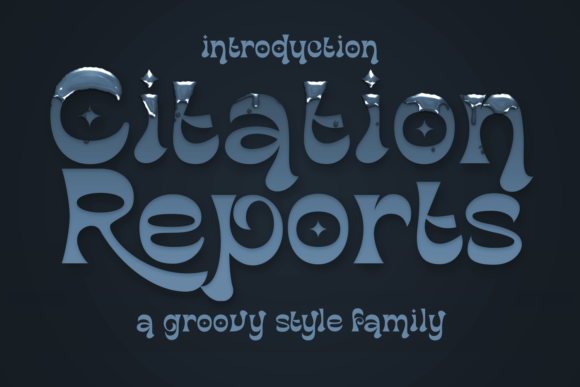
Citation Reports Font: A Vintage Touch for Modern Branding
It was a rainy Thursday afternoon when I sat down to redesign the packaging for my client’s new line of handmade chocolates. The goal was simple: create something that felt nostalgic, inviting, and unmistakably them. After trying out a handful of fonts that either felt too corporate or too whimsical, I stumbled upon Citation Reports. As a display font, it brought just the right amount of charm and character to their brand identity.
Citation Reports Font for Product Packaging with a Retro Vibe
What sets Citation Reports apart is its ability to evoke a sense of timelessness without being over the top. It feels playfully nostalgic, delivering an incredible vintage retro aesthetic that instantly adds warmth to any design. When I applied it to the chocolate box labels, the difference was immediate — suddenly the packaging had a personality, a story behind it. It wasn’t just about selling a product anymore; it was about creating an experience.
For small businesses in niches like gourmet foods, artisanal goods, or even craft beer, this kind of visual storytelling can be powerful. The boldness of Citation Reports ensures your brand name doesn’t get lost in the shuffle, while the playful elements invite curiosity. Customers don’t just see a label — they feel something.
Citation Reports as a Display Font for Café Menus and Social Media Banners
A few weeks later, I was working with a local café owner who wanted to refresh her Instagram templates and menu board. She was looking for something that stood out but still felt approachable. That’s where Citation Reports really shined. Used as a headline on both printed menus and digital banners, it gave her brand a cohesive, vintage-inspired look that matched the cozy, handcrafted vibe of her space.
On social media, especially platforms like Instagram, first impressions matter. With mobile users scrolling fast, the retro flair of Citation Reports caught attention and made her posts more memorable. And because it’s a display font, it worked beautifully in short phrases and bold titles, where readability and impact are key.
Citation Reports Font for Thank-You Cards and Brand Tags
I recently helped a boutique owner update her thank-you cards and custom tags for gift wrapping. Her shop specializes in curated vintage-style items, so she needed typography that aligned with her brand’s mood. The moment we used Citation Reports, everything clicked into place. The playful yet polished nature of the font gave the cards a personal touch — like writing from a friend who also happens to run a stylish boutique.
In these kinds of materials, where the message is short but meaningful, having the right typeface can elevate the entire experience. Citation Reports isn’t just a font — it’s a design element that makes customers feel seen and appreciated. And that’s exactly what branding should do.
How Citation Reports Helps with Visual Consistency Across Materials
One of the biggest challenges for small business owners is maintaining a consistent brand image across all touchpoints. Whether you’re printing stickers, designing flyers, or building website banners, using a single font family can unify your message. Citation Reports works seamlessly across multiple formats, which means your logo, your packaging, and your social media can all sing the same visual tune.
This level of consistency builds trust. People start to recognize your brand not just by what you sell, but how it looks and feels. And with a font that delivers such a strong mood — warm, bold, and vintage — you’re setting yourself up for a brand identity that stands out in the best way possible.
Font Pairing Tips for Using Citation Reports in Branding Projects
If you're thinking about incorporating Citation Reports into your designs, pairing it with the right supporting fonts is essential. Since it’s a bold and expressive display font, it pairs well with clean sans serif fonts for body text. Think of something like Montserrat or Lato to keep things modern and easy to read while letting Citation Reports take center stage.
For more elegant applications, like product descriptions or blog headers, a soft serif font like Playfair Display or Georgia can balance the nostalgia with sophistication. If you want to add some extra flair to your creative assets, consider mixing it with a script or handwritten font for accents or quotes. Just remember — always use Citation Reports as the hero, not the background.
Using Citation Reports for Business Cards and Digital Ads
Business cards are often one of the most overlooked branding tools. But when done right, they can leave a lasting impression. For a coaching brand that wanted to convey authenticity and creativity, we designed a minimalist card using Citation Reports for the name and title. The result? A piece that looked professional yet approachable — perfect for making connections at networking events.
On digital ads, especially those meant for online shops or marketplaces, Citation Reports added a layer of charm that made the content more engaging. Whether it was a headline for a new candle launch or a call-to-action on a skincare product page, the retro aesthetic pulled people in and encouraged them to learn more. And since it’s part of a commercial font collection, it's safe to use in paid campaigns and branded materials.
Readability Tips for Small Labels and Mobile Screens
While Citation Reports is a showstopper, it’s important to understand where it shines and where it might need support. Because it’s bold and stylized, it’s ideal for headlines, logos, and decorative accents. However, it’s not the best choice for long paragraphs or tiny print. When using it on product labels, especially for small businesses with limited space, I recommend keeping it to key phrases or brand names.
On mobile screens, where every pixel counts, scaling up the font size helps maintain clarity. Also, make sure there’s enough contrast between the font and the background color. Even the boldest display fonts can lose their impact if they blend in. Always test your designs on real devices before finalizing them for print or web.
Why Commercial Font Licensing Matters for Your Business
When you're choosing a font like Citation Reports for your branding, it’s crucial to check the licensing terms. Many free fonts come with restrictions — especially when it comes to commercial use. This includes anything from product packaging to client work and digital downloads. Make sure the font you select allows for the specific use cases you have in mind.
Luckily, Citation Reports is available in a commercial license that supports a wide range of applications. You can confidently use it for physical products, digital assets, and even resellable design templates. Before purchasing, review the included styles, file formats, and any alternates or ligatures that could enhance your project. Some premium fonts offer variations that allow for greater customization, and Citation Reports is no exception.
Small businesses often underestimate the power of typography. But when you choose a font that reflects your brand’s personality — like Citation Reports — you’re not just improving aesthetics. You’re crafting a visual language that speaks directly to your audience. And in today’s competitive market, that can make all the difference.